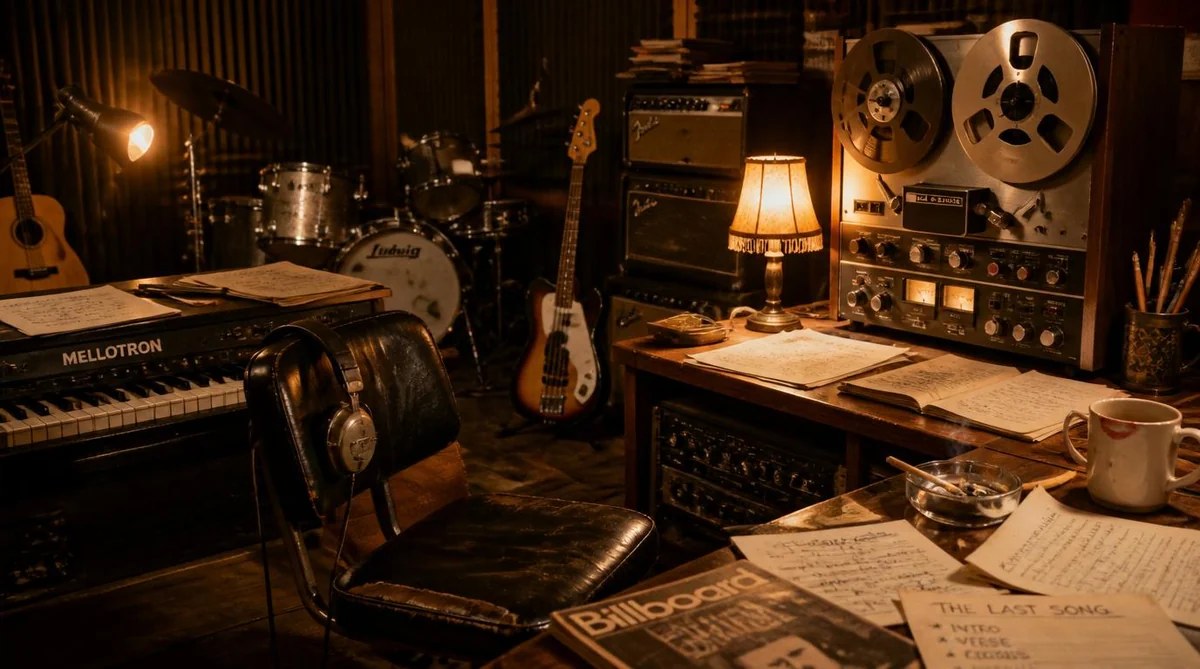
The question seems simple. Did Paul McCartney really play every instrument on "McCartney" (1970), "McCartney II" (1980), and "McCartney III" (2020)?
The short answer is mostly. The honest answer needs a little more room.
"McCartney" and "McCartney II" land very close to the one-man-band story. "McCartney III" is the album where the clean version of the legend breaks down. There are real exceptions on the third record, and they matter, even if they do not change the larger picture.
The 1970 album is the strongest case
McCartney's official site is plain about it. He played every instrument on the album and sang all the lead vocals, with backing vocals from Linda McCartney. The record was made quietly, on home equipment, while McCartney was processing the end of the Beatles. The result sounds smaller than "Abbey Road" because it was. He had a four-track tape machine borrowed from EMI, and the songs came out of that constraint.
One famous exception is studio context, not personnel. "Maybe I'm Amazed" was tracked at EMI Studios rather than at home. Per The Beatles Bible, engineer Alan Parsons confirmed McCartney played every instrument on that session himself and finished the track in a single day. The band roster did not change. The recording address did.
McCartney II repeats the method more deliberately
"McCartney II" picks up the same approach a decade later. The 1980 album credits read "Instruments and voices by Paul McCartney" with "additional vocals by Linda McCartney." McCartney is also the producer and engineer. Eddie Klein is credited with technical assistance. That phrase is doing real work. Technical assistance is not musical performance. Klein did not play.
McCartney explained the choice himself. "I felt like doing it the homemade way again, where I play all the instruments." Wings was over. The album that resulted does not sound like Wings, or like the 1970 record, or like anything else in the McCartney catalog. "Coming Up" sounds like a sped-up cartoon band. "Temporary Secretary" is a synth experiment that wandered into a pop song. "Front Parlour" and "Frozen Jap" are pure McCartney-alone instrumental pieces. None of it sounds like a band, because no band was in the room.
McCartney III is where the tidy story bends
The 2020 record was made during lockdown, mostly recorded live with McCartney singing while playing guitar or piano, building up the tracks one layer at a time. McCartney has described the process in detail. "Each day I'd start recording with the instrument I wrote the song on and then gradually layer it all up." He said he did not even realize he was making an album at first. That spirit matches the original trilogy.
But two tracks complicate it.
"When Winter Comes" is an older recording, originally co-produced by George Martin many years before lockdown. It sits surrounded by new lockdown material on "McCartney III," with a freshly recorded intro called "Winter Bird." So "When Winter Comes" has George Martin's hand on it, not just McCartney's.
"Slidin'" is the bigger break. The Beatles Bible credits the song to McCartney on vocals, electric guitar, and bass guitar, with Rusty Anderson on electric guitar and Abe Laboriel Jr. on drums. Anderson and Laboriel are McCartney's longtime touring band. They played on the record. "Slidin'" is not a McCartney-alone track.
This does not turn "McCartney III" into a band album. The rest of the record is one person and a microphone, the same way the original two were. But "Slidin'" and "When Winter Comes" mean the blanket claim that McCartney played every instrument on all three records is not quite accurate. It is close. It is not exact.
The cleanest summary
"McCartney" (1970): McCartney plays every instrument. Linda adds backing vocals.
"McCartney II" (1980): McCartney plays every instrument. Linda adds backing vocals.
"McCartney III" (2020): McCartney plays nearly every instrument. George Martin co-produced "When Winter Comes" decades earlier. Rusty Anderson and Abe Laboriel Jr. play on "Slidin'."
Why the precision matters
The trilogy is impressive for a reason that goes beyond a trivia line. Three times in fifty years, at three of the most pivotal moments in his career (the end of the Beatles, the end of Wings, a global lockdown), McCartney shut the door, kept the band out, and proved he could still make a record by himself.
That is the story. The asterisks on "McCartney III" do not weaken it. If anything, they make it more believable. A 78-year-old in 2020 inviting his touring guitarist and drummer to one track is not a cheat. It is a person who has earned the right to do whatever the song needed.
The legend works better with the corrections than without them.
---
Sources:
- Paul McCartney official discography. McCartney. https://www.paulmccartney.com/discography/albums/mccartney
- Paul McCartney official discography. McCartney II. https://www.paulmccartney.com/discography/albums/mccartney-ii
- Paul McCartney official discography. McCartney III. https://www.paulmccartney.com/discography/albums/mccartney-iii
- Paul McCartney official news. Updated: McCartney III, the new studio album out December 18. October 21 2020. https://www.paulmccartney.com/news/updated-mccartney-iii-the-new-studio-album-out-december-18
- The Beatles Bible. Recording, mixing: Maybe I'm Amazed by Paul McCartney. https://www.beatlesbible.com/1970/02/15/recording-mixing-maybe-im-amazed-by-paul-mccartney/
- The Beatles Bible. Slidin'. https://www.beatlesbible.com/people/paul-mccartney/songs/slidin/
- The Beatles official site. McCartney III. October 21 2020. https://www.thebeatles.com/mccartney-iii